The photos look dreamy: a canvas tent glowing at dusk, a proper bed inside, mountains behind. But booking a glamping site in new Zealand based on pictures alone often leads to surprises, from composting toilets to gravel roads to cool nights that no amount of linen can fully fix. Many travelers arrive unsure what “luxury” actually means at their chosen site.
This guide sets realistic expectations before you pay a deposit. We’ll walk through the types of accommodation on offer, what a night typically costs, the best times to book and visit, and what amenities you can genuinely count on. We’ll also cover how remote these sites usually are, what to pack, and a quick summary of the essentials. By the end, you’ll know exactly what questions to ask a host and what to expect when you pull up at your tent, dome or cabin.
What Kind of Glamping Accommodation You’ll Find in New Zealand
The classic New Zealand glamping setup is the safari-style canvas tent. These are large, permanent structures with a proper bed frame, quality linen, and usually some furniture and a deck. They’re the most common choice because they handle the climate well and photograph beautifully, but they’re still canvas, so sound and temperature inside follow the weather outside. On a calm summer evening that’s part of the charm; when the wind picks up, you’ll hear it in the walls.
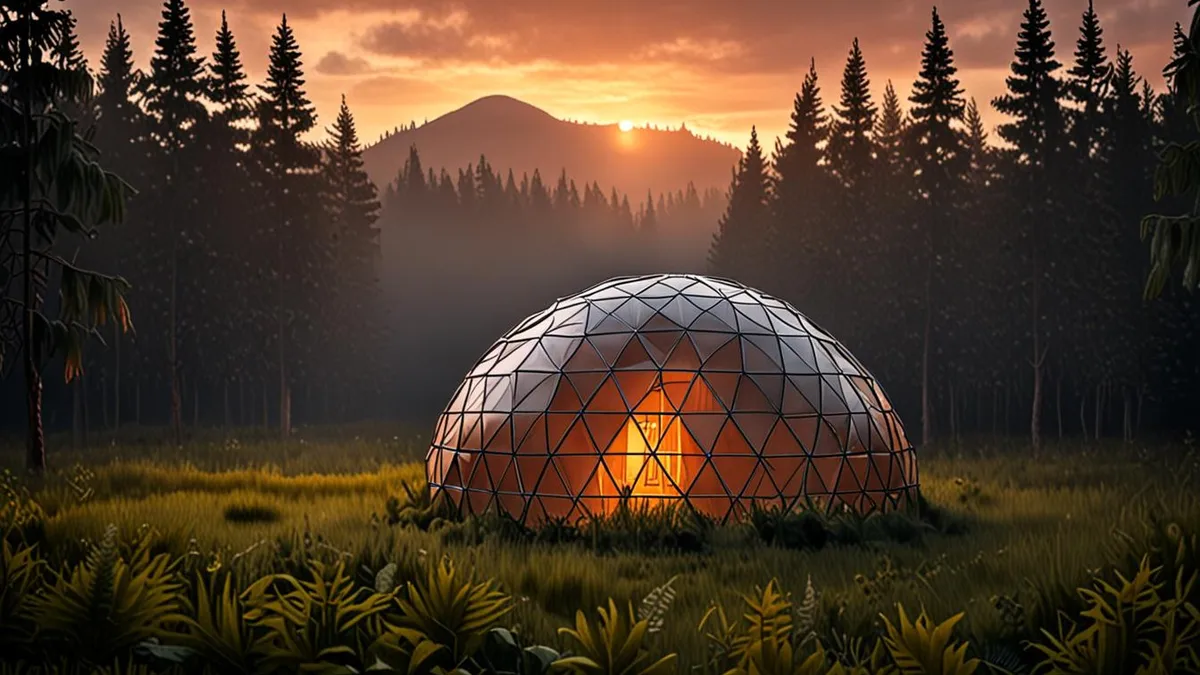
Forest and coastal locations often go a different route, choosing geodesic domes and yurts instead. These round structures feel more solid than a tent and tend to hold warmth better, which matters on a breezy night, especially since nights stay cool even in summer. Some operators also offer small luxury cabins for travelers who love the scenery but don’t trust canvas in wind or rain.
- Safari tents usually include a deck or veranda, giving you a dry outdoor space even when the grass around it is damp.
- Geodesic domes often feature clear window panels, so you can watch the sky or surrounding bush from the bed itself.
- Yurts typically have a circular layout with a central pole, creating a cozy, cabin-like feel despite the fabric walls.
- Luxury cabins are the safest pick for stormy forecasts, since they’re built like small houses rather than temporary structures.
- Most units across all these styles sleep two adults, so couples are well served but groups are not.
- Family-sized options are limited across New Zealand, so confirm sleeping capacity and bed configurations with the host before booking.
Whichever style you choose, ask the host exactly what’s inside the unit. The difference between two safari tents can be bigger than the difference between a tent and a cabin, and photos rarely show the details that matter most on a rainy night.
How Much a Glamping Site in New Zealand Costs per Night
Most glamping sites in New Zealand charge roughly NZ$150-400 per night for two people. Where you land in that range depends on location and amenities: a simple safari tent in a paddock with shared facilities sits at the low end, while a domed unit with an ensuite, private hot tub and sweeping views pushes toward the top.
How Timing Affects the Price
Peak-season weekends in popular regions sit at the top of that range, and the most sought-after sites often price right up to it. Midweek stays and shoulder-season dates frequently drop toward the lower end, so shifting your trip by even a couple of days can make a real difference to the total cost.
Check What’s Actually Included
Inclusions vary widely between sites, and this is where quotes that look similar can diverge. Some hosts provide linen, firewood and breakfast as standard; others charge extra for each or expect you to bring your own bedding. Before booking, ask specifically about linen, firewood and breakfast, and factor any add-ons into your comparison. A site that looks cheaper per night can end up costing more once you’ve bought supplies at the nearest town.
When to Book and When to Go
Timing matters more for glamping than for a standard motel stay, because inventory is small. A site with four or five units can sell out months before a nearby hotel does, and there’s rarely a “similar property down the road” to fall back on. That means the difference between the trip you imagined and a compromised version often comes down to when you start looking. Here’s how to plan your booking and your dates.
- Identify your season first. Peak season runs December to February, which is when demand is highest and sites sell out first. If your dates fall in this window, treat availability as scarce from the moment you start planning.
- Book peak dates 3-6 months ahead. This is especially important for weekends and public holiday periods in popular regions like the far north, the Coromandel or Central Otago. Waiting until summer to book a summer stay usually means settling for whatever is left.
- Use the shoulder season for flexibility. October-November and March-April still offer reliable weather in most glamping regions, but with lower prices and far more open calendars. If your schedule allows, these months deliver the best balance of cost and conditions.
- Book shoulder-season stays 2-4 weeks out. Outside the summer rush, most sites have availability with only a few weeks’ notice, which suits spontaneous trips. Check directly with hosts if a site shows no online availability, as cancellations happen.
- Prepare for cool nights whatever the month. Summer days in most glamping regions reach about 15-25°C, but nights stay cool thanks to clear skies and open countryside. Pack for evenings even when the forecast looks warm.
It also pays to be decisive once you find a site that fits your budget and dates. Small operators often hold only a handful of units, and a tent that was available this morning may be gone by the weekend. If you’re traveling with friends or family and need multiple units, contact hosts early to ask whether they can accommodate your group in one booking.
One final note on timing: weather in New Zealand can change quickly in any season, so build a little slack into a canvas-based trip. A flexible booking policy is worth paying slightly more for if your dates aren’t fixed.
Amenities and Off-Grid Realities
Glamping in New Zealand often means going at least partly off-grid, and that’s part of the charm rather than a drawback. Many sites run on solar power, use composting toilets and provide shared outdoor kitchens instead of conventional hotel-style facilities. You still get a proper bed, warm bedding and a memorable setting, but the infrastructure is lighter on the land. It’s comfortable, yet it’s not a hotel, so it pays to know exactly what you’re signing up for before you book, especially if you’re new to this style of travel.
The biggest surprise for first-timers is usually the bathroom situation. An ensuite bathroom is a premium feature in New Zealand glamping, not a default. Plenty of units share clean, well-maintained facilities a short walk away, which is perfectly pleasant in practice but worth knowing in advance if you had different expectations. If a private bathroom matters to you, filter listings for it or confirm with the host directly before paying a deposit.
Before you commit, take a close look at what each unit actually includes, because amenities vary far more between sites than photos suggest. Listing pages usually spell out the power, toilet and cooking arrangements, and hosts are generally happy to answer questions if the details aren’t clear. A quick message can save you from an uncomfortable surprise.
- Solar power limits: electricity is often rationed to lighting and device charging, so don’t count on running a hairdryer or kettle in your tent.
- Composting toilets: these are typically clean and odor-free when well managed, but they work differently from flush toilets, and hosts usually leave simple instructions nearby.
- Shared outdoor kitchens: expect covered cooking areas with a stove, basic cookware and a communal fridge, so label your food and plan simple meals.
- Connectivity: phone coverage and Wi-Fi can be patchy or deliberately absent at remote sites, so download maps and entertainment before you leave town.
- Heating: rather than central heating, you’ll often get a wood burner stocked with firewood, or a hot-water bottle tucked under the duvet, which is surprisingly effective on cool nights.
Getting There: Location and Access
Glamping in New Zealand is a genuine escape, and that shows in the geography. Most sites sit roughly 30-90 minutes’ drive from the nearest town, often on farmland, forest edges or coastal blocks chosen for their views and quiet rather than their convenience.
The final stretch of the journey is frequently on unsealed gravel roads. In dry weather these are fine for most rental cars, driven slowly and carefully. After heavy rain, conditions can change, so it’s worth checking with your host on the day you travel and confirming what your rental agreement says about gravel roads.
Parking and the walk to your tent
Don’t assume you can park at your door. Some sites require a short walk from the parking area to your unit, sometimes across grass or a gravel path. Ask your host about the distance and surface, and pack your bags so you can carry everything in one or two trips. A soft duffel bag is often easier to manage than a hard suitcase on this kind of terrain.
Stock up before you arrive
Because sites are remote, there’s usually no corner shop down the road. Arrive with your food, drinking water supplies and any essentials already bought in the last town you pass through. If you plan to cook, think through your meals in advance, and remember that a shared outdoor kitchen rewards simple recipes. Hosts can usually tell you exactly what’s provided, from cooking oil to coffee, so a quick message before you leave saves an awkward discovery at dinnertime.
What to Pack for New Zealand Glamping
Packing for a glamping trip in New Zealand is closer to packing for light camping than for a hotel stay, even when your accommodation has a proper bed and linen. The main thing to plan for is variety in a single day: warm afternoons, cool evenings and the possibility of rain at almost any time of year. Because many sites sit well outside town, often 30-90 minutes’ drive away on unsealed roads, you won’t be nipping back to a shop if you forget something, so a short checklist pays off.
Even in midsummer, when daytime temperatures in most glamping regions sit around 15-25°C, nights get genuinely chilly once the sun drops, and canvas or dome walls don’t hold heat the way a hotel room does. Layers are your friend, along with one warm jacket you can pull on the moment the temperature dips. Good footwear matters too, since paths around rural sites are often grassy or turn muddy after rain. Pack a soft duffel rather than a hard suitcase if your host has warned you about a walk from the parking spot, and keep food and drinking water in mind, since remote sites rarely have supplies on hand.
- A torch or headlamp: off-grid sites keep exterior lighting minimal, both to save power and to preserve the night sky, so bring one per person with spare batteries.
- Waterproof layer: a packable rain jacket covers you for walking to shared kitchens and bathrooms in a shower, not just for planned day trips.
- Sturdy closed shoes: sneakers or light hiking shoes handle wet grass and gravel far better than sandals, especially early in the morning when everything is damp.
- Insect repellent: sandflies are a real nuisance near lakes, rivers and on the West Coast, and they’re small enough to get through open tent windows.
- Warm socks and a beanie: sounds excessive for summer, but you’ll be glad of them sitting outside stargazing or reading in the evening.
Wrapping Up Your New Zealand Glamping Expectations
So what should you actually expect when the photos meet reality? A glamping site in new Zealand typically means a safari tent, dome or yurt costing around NZ$150-400 a night for two people, set on a remote property that may be 30-90 minutes from the nearest town. Amenities are often off-grid, so solar power, composting toilets and shared outdoor kitchens are more common than ensuites and central heating.
That mix of comfort and rustic is exactly the trade-off you’re paying for. Book early if you’re traveling in peak season, pack layers and a torch for the cool nights, and arrive with supplies already bought. Do that, and the reality usually lives up to the photos. If you’ve stayed at a glamping site in new Zealand, share your experience in the comments or pass this article along to a friend planning a trip.