You land in Bangkok with a fixed budget and one big question: does a cheap dorm bed actually leave more money for street food, skytrain rides and temple tickets, or does a small private room work out better? The hostel vs budget hotel in bangkok debate is not just about the nightly rate. It is about what you pay extra for, what you get included and how much sleep you lose along the way.
This guide breaks the comparison into the parts that actually affect your wallet. We start with the real price gap between dorms and privates, then look at hidden costs like lockers and towel rentals that quietly add up. After that, we cover comfort and sleep quality, which neighborhoods suit each option best, and the specific situations where a hostel clearly wins or a budget hotel clearly wins. By the end, you will know which choice fits your trip length, group size and travel style, so more of your baht goes to the fun stuff.
Hostel vs Budget Hotel in Bangkok: The Real Price Gap
The headline numbers look simple. A dorm bed in Bangkok typically costs 250-500 THB per night, while a budget hotel private room typically runs 600-1,200 THB. On paper, that is a gap of several hundred baht every single night, which sounds like a clear win for the hostel.
What a week actually costs
Stretch it over a 7-night stay and the difference gets harder to ignore. A week in a dorm adds up to roughly 1,750-3,500 THB, while the same week in a budget hotel comes to around 4,200-8,400 THB. That spread can easily cover a week of street food meals, a couple of day trips or your onward flight elsewhere in Southeast Asia.
But the raw rate is not the whole story. Prices swing with the calendar, and the season you travel in can shrink or widen this gap considerably.
How the season changes the deal
During the low season from May to October, many places cut rates by 20-40% to fill empty rooms. Budget hotels drop their prices too, so a private room that was out of reach in February may suddenly sit close to dorm pricing in June. If your dates are flexible, checking rates in the low season is one of the easiest ways to get more room for less money. Booking 2-4 weeks ahead usually secures the best low-season rates, so plan a little early and compare both options before you commit.
Hidden Costs That Change the Math
The nightly rate on a booking site rarely tells the whole story, especially for hostels. What looks like the cheapest bed in Bangkok can quietly cost more once you add the small fees that budget hotels typically include for free. These extras usually run 50-150 THB per day, which over a week rivals the price of another dorm night entirely. That is a frustrating surprise for travelers who booked the bed purely on price, and it is easy to avoid once you know what to look for.
Budget hotels, by contrast, tend to bundle the essentials into the room rate. Towels, toiletries and air conditioning are usually included at no extra charge, so the price you see is much closer to the price you pay. That predictability matters when you are counting every baht, because it lets you compare listings honestly and plan a daily budget without a buffer for surprise charges at reception.
- Lockers: many hostels charge a small daily or per-stay fee for a secure locker, and some require you to bring your own padlock or buy one at reception, so factor that into the real cost of the bed.
- Towel rentals: hostels often rent towels by the day, and the fee can rival what a cheap towel costs to buy, so frequent travelers sometimes just pack their own to avoid the charge.
- Laundry: hostel guests often pay per load to wash and dry clothes, while some budget hotels include laundry service or at least offer it at a lower guest rate.
- Transport savings: staying near Khao San Road or Sukhumvit cuts daily travel costs, since BTS and MRT trips typically run 17-70 THB, and a well-located base means fewer of those trips every day.
Before you book, scroll through the hostel’s full listing and read recent reviews for mentions of add-on fees, then compare the all-in daily cost against a comparable hotel room. A five-minute check can save you real money over a week-long stay, and the cheapest bed is not always the cheapest stay.
Comfort, Privacy and Sleep Quality
Money is only half the decision. The other half is how well you actually rest, and this is where the two options differ most sharply. A dorm means sharing a room with 6-8 bunk mates, each arriving and leaving at different hours, snoring, rustling plastic bags and switching on headlamps at 3 a.m. Storage is limited to a locker, and bathrooms are shared with the whole floor.
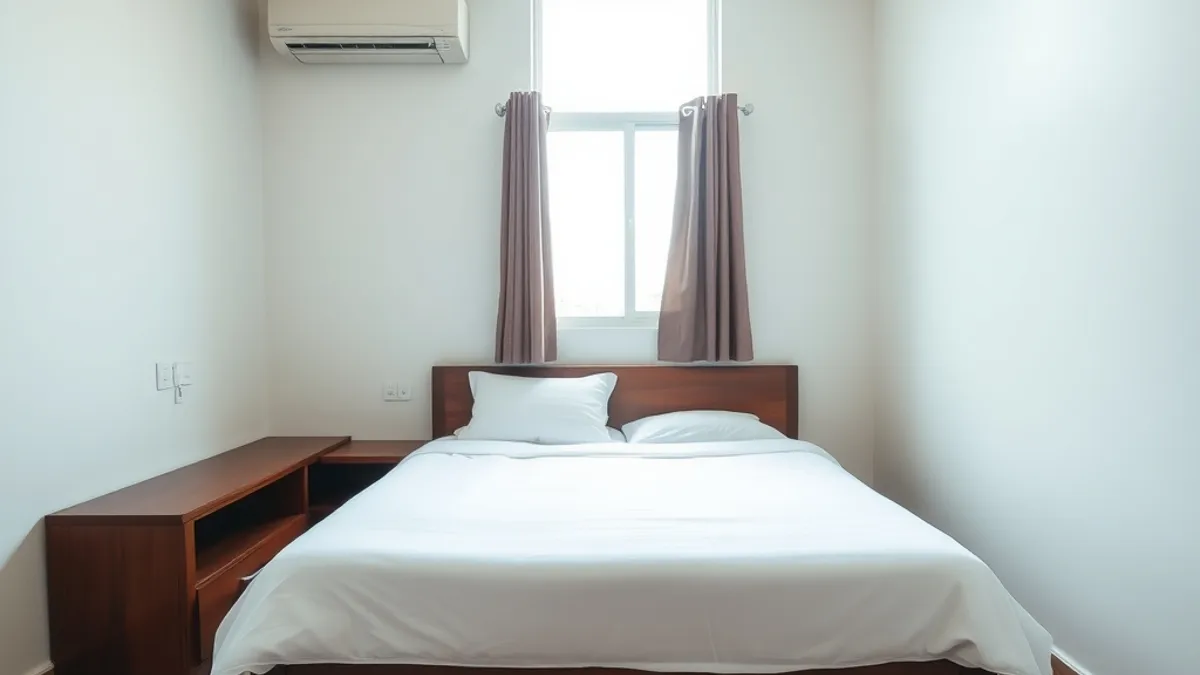
A budget hotel flips that experience. You get a private bathroom, quieter nights and enough space to spread out, work on a laptop or repack your bag without an audience. For anyone who needs to be functional the next morning, that difference is not a luxury, it is practical.
Who really notices the difference
Light sleepers feel it first. Earplugs and an eye mask help, but they rarely match a closed door and a quiet corridor. If jet lag, early flights or a full sightseeing schedule are part of your plan, poor sleep can cost you days of your trip.
Couples have it even simpler: most hostels either do not offer doubles or charge close to private-room prices anyway. The nightly upgrade from a dorm bed to a budget hotel room typically runs 350-700 THB, and for light sleepers and couples that upgrade is usually worth every baht. You sleep better, start earlier and get more out of each day in the city.
Location and Neighborhood Choice
Where you stay shapes what you pay, and Bangkok’s budget accommodation is spread unevenly across the city. Khao San Road and the surrounding Banglamphu streets remain the classic hostel zone, with dorms packed into old shophouses and guesthouses. The trade-off is distance: there is no BTS or MRT station nearby, so you will rely on buses, boats or ride-hailing apps to reach most attractions.
Sukhumvit and Silom tell a different story. These districts hold most of the city’s budget hotels, and many sit within a short walk of BTS and MRT stations. That proximity matters when a single Skytrain trip typically costs 17-70 THB — a station on your doorstep means fewer taxi fares over a week. Street food is still easy to find here too, especially around the markets and side sois off Sukhumvit.
The riverside is the awkward middle ground. This area leans heavily toward mid-range and upscale hotels, so dorm beds are limited and budget privates are scarcer than in Sukhumvit. If a river view tempts you, expect to stretch your per-night budget or compromise on location.
- Khao San’s food advantage: street food meals commonly cost 40-80 THB, so a day of pad thai, mango sticky rice and late-night skewers can cost less than one sit-down restaurant meal elsewhere.
- Sukhumvit’s station spread: the BTS line runs along much of the road, so even budget hotels several stops apart keep you connected without changing neighborhoods.
- Silom’s dual rail access: this district serves both the BTS and the MRT, making it one of the easier places to switch lines without a taxi.
- Riverside transport workaround: the Chao Phraya express boats act as a cheap substitute for the train, which partly offsets the area’s thinner budget-hotel scene.
When a Hostel Clearly Wins
Solo and short stays
If you are traveling alone and staying fewer than 5 nights, a dorm bed is almost always the cheapest option. With a single person paying for one bed instead of a whole room, the nightly saving is at its largest. Short stays also mean you spend less time dealing with the downsides of dorm life, like shared bathrooms and limited storage, so the trade-off feels lighter.
Booking a hostel for a short solo trip also keeps your budget flexible for everything else Bangkok offers, from street food to day trips. If your dates fall outside the November to February peak, hostel rates drop further, and the gap between dorms and private rooms can narrow enough that a hotel becomes tempting. Keep an eye on rates in the weeks before you travel, since discounted low-season beds tend to appear closer to arrival than you might expect.
Social travelers and stopover backpackers
Hostels earn their keep in other ways too. Many Bangkok hostels run free events, from walking tours to rooftop dinners, and shared kitchens let you cut food costs when you are tired of eating out. For anyone traveling alone who wants company, a dorm is the fastest way to meet people, since your bunkmates are usually on similar itineraries and happy to team up for a temple visit or a night market run.
Backpackers moving through Southeast Asia often treat Bangkok as a short stopover rather than a destination. If you are flying onward to Hanoi or heading to relaxing beach retreats across Bali, a one- or two-night dorm stay keeps costs minimal while you sort out visas, laundry and onward transport. Comfort matters less when you are gone again in 48 hours.
When a Budget Hotel Clearly Wins
Pairs and groups: the math flips
The moment you are traveling with someone else, the hostel advantage mostly disappears. Two dorm beds at 500-1,000 THB combined often cost the same as one private budget hotel room, and the room gives you a private bathroom, a door that locks and a quiet night. Splitting a 600-1,200 THB room between two people usually works out cheaper per person than two separate dorm beds, and you get far more comfort for the money.
The same logic applies to groups of three or four. Booking one or two private rooms in a budget hotel is often comparable in total cost to booking several dorm beds, and everyone gets their own space to repack, shower and sleep without listening to six strangers’ alarms.
Long stays and the hot season
Time changes the math too. If you are staying longer than 7 nights, many budget hotels offer weekly rates that fall below their per-night average, which dorms rarely match once you add up locker and laundry fees over a week or more. Ask about weekly or monthly rates when you book, and compare the total rather than the headline nightly price.
Finally, think about the weather. Bangkok’s hot season peaks in March and April, when daytime temperatures climb and reliable air conditioning stops being a luxury. Budget hotels almost always include air conditioning in the room rate, while some hostels only cool common areas or charge extra. Travelers with early flights or early check-in needs also fare better in hotels, where front desks are typically staffed around the clock and luggage storage is standard.
The Bottom Line for Your Bangkok Budget
So which one saves more money? If you’re traveling solo, a dorm bed typically leaves several hundred baht extra in your pocket each night compared with a budget hotel private room. Stretch that across a week and the difference adds up fast — enough to cover plenty of pad thai from a night market, a few trips on the BTS and entry fees for a couple of temples. For short solo trips, the math is hard to beat.
For couples, groups or anyone staying more than a week, budget hotels usually win on price per person, and you get privacy, your own bathroom and dependable air conditioning as part of the deal. The right choice really comes down to three things: how long you’re staying, how many people you’re traveling with, and which season you visit. If this helped you plan your Bangkok budget, leave a comment below or share the article with a fellow traveler who’s weighing the same decision.